NewMetal 3D Printing (DMLS) now available for Aerospace, Defence & Medical applicationsLearn More
Contact Us Get Free Quote →
Industrial Metal 3D Printing DMLS LPBF

Industrial Metal 3D Printing Services.

Production-Grade Additive Manufacturing. LPBF, SLM, & DMLS Expertise.

Transition your complex metal geometries from concept to functional reality with Chennai's only industrial metal 3D printing service specializing in LPBF, SLM, and DMLS. Crenodez provides top-tier metal additive manufacturing through a precision-managed network from our base in Chennai, Tamil Nadu, India. Conforming to ISO/ASTM 52900 additive manufacturing standards, we deliver dense, high-strength parts for aerospace, defence, medical, and heavy-duty engineering applications — serving clients across Chennai, pan India, and globally.
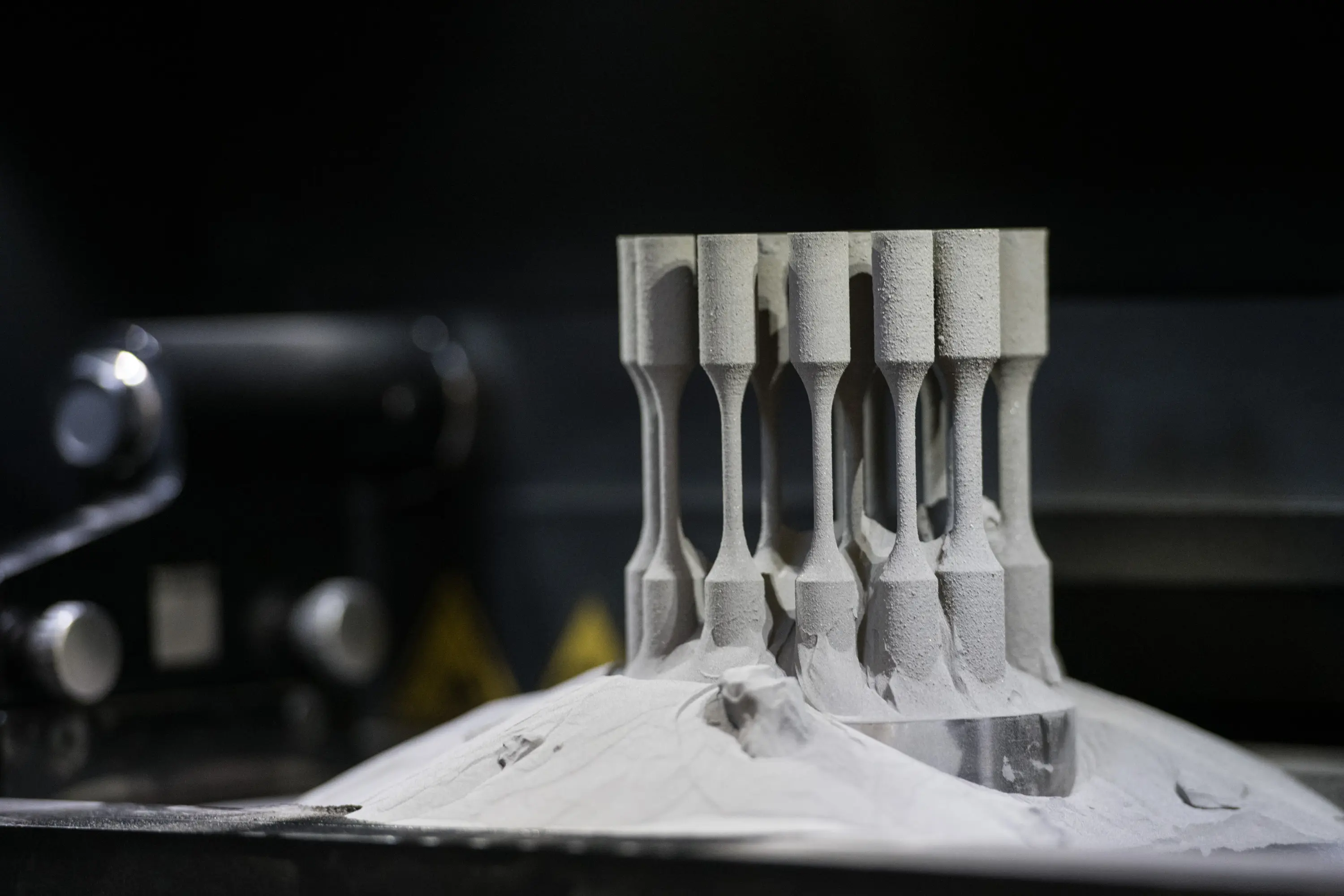
Unifying LPBF, SLM, and DMLS Under One Quality Standard

While different regional markets utilize varying terminology—with European sectors heavily favoring Laser Powder Bed Fusion (LPBF) and Selective Laser Melting (SLM), and other global spaces using Direct Metal Laser Sintering (DMLS)—the core engineering physics remains elite. These processes utilize a high-precision fiber laser to selectively melt and fuse fine metal powders layer-by-layer. Our unified digital manufacturing framework eliminates technical fragmentation, ensuring that whichever nomenclature your procurement team utilizes, the final custom metal 3D printed parts meet absolute mechanical density, structural uniformity, and isotropic integrity.

Beyond CNC Machining

Solving Complex Engineering Challenges at Scale

Metal additive manufacturing is not merely a replacement for traditional subtractive toolpaths; it is an enabler for unprecedented structural optimization.

  • Part Consolidation: Re-engineer complex assemblies composed of multiple welded components into a single, seamless monolithic metal structure, drastically reducing assembly time and failure risks.
  • Lightweighting & Topology Optimization: Utilize advanced internal lattice structures to shave up to 50% off a component's weight while maintaining full load-bearing capabilities.
  • Conformal Cooling Channels: Integrate organic, curved internal fluid lines inside injection mold inserts and thermal management systems that are physically impossible to drill using traditional CNC setups.
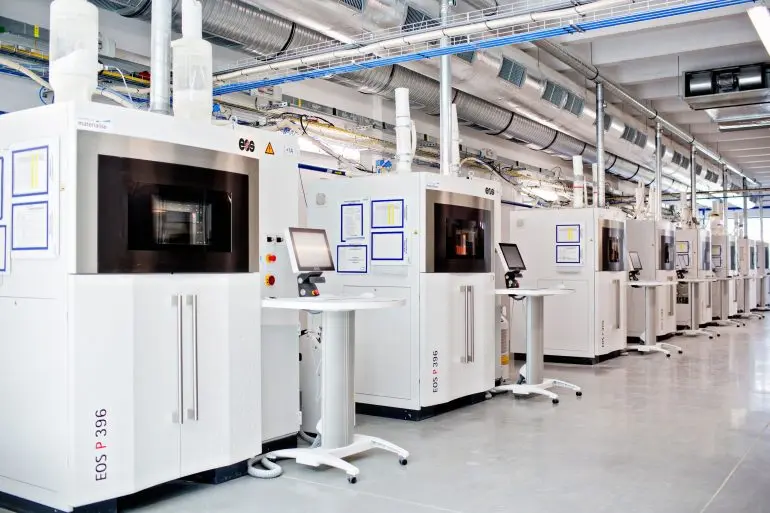
Industrial Metal 3D Printer LPBF System
Metallurgical Specifications

Production-Grade Alloys for High-Stress Environments

We source certified, fully traceable spherical metal powders to ensure parts possess high tensile strength, excellent fatigue limits, and zero internal structural voids.

  • Stainless Steel (316L): Highly corrosion-resistant, ductile, and food-safe. The industry standard for rugged environments, industrial chemical processing infrastructure, and complex marine hardware.
  • Aluminum (AlSi10Mg): The go-to lightweight alloy combining excellent thermal conductivity with high mechanical strength. Ideal for rapid thermal management units, thin-walled brackets, and automotive housings.
  • Titanium (Ti6Al4V / Grade 5): Unmatched strength-to-weight ratio, extreme temperature resistance, and certified biocompatibility. Heavily relied upon for aerospace brackets, lightweight defense components, and medical implants.
  • Nickel Alloy / Inconel (718): A high-strength superalloy designed to resist extreme oxidation, mechanical stress, and thermal shock at temperatures exceeding 700°C. Perfect for gas turbines, aerospace propulsion, and high-performance exhaust systems.
  • Tool Steel (17-4 PH / Maraging Steel): Capable of undergoing intensive post-print heat treatment to achieve extreme surface hardness and fracture toughness. Ideal for high-wear manufacturing jigs, cutting dies, and heavy industrial automation inserts.
Complete Turnkey Execution

Delivering Precision Beyond the Print Bed

A premium metal component is defined by its final tolerances. Our workflow offers comprehensive post-processing to transition raw prints into ready-to-install industrial components.

  • Stress Relief Heat Treatment: Every metal print undergoes controlled furnace thermal cycles while still attached to the build plate to eliminate internal residual stresses caused by high laser thermal gradients.
  • Precision CNC Post-Machining: We bridge the gap between additive tolerances and micron-level accuracy. We utilize precision mills and lathes to tap threads, ream high-tolerance bearing seats, and face mating flanges perfectly flat.
  • Wire EDM: Ensures mathematically perfect slicing of thick-walled parts from the heavy steel build plates without inducing mechanical distortion.
  • Advanced Surface Finishing: Options range from standard media blasting for a uniform clean matte aesthetic to vibratory tumbling, electropolishing, and manual hand-lapping for mirror-like finishes.
Proven Sectors

Built for High-Stakes Industrial Automation

Heavy Industrial Connectivity

High-precision, shock-resistant metal housings and ruggedized backshells for modular industrial connectors, protecting critical data and power lines in extreme factory automation environments.

Advanced Industrial Equipment

Custom components for automated assembly lines, high-wear grippers, custom hydraulic manifolds, and robotic end-of-arm tooling.

Aerospace & E-Mobility

Lightweight structural brackets, sensor enclosures, heat exchangers, and aerodynamic validation prototypes.

Rigorous Quality Control Standards

Operating under an ISO 9001 quality framework, our engineering team executes a thorough Design for Manufacturing (DFM) review on every incoming CAD step file. We analyze part orientation to minimize internal thermal stress, optimize necessary support structures, and verify that critical internal channels are self-supporting. Post-production validation options include coordinate measuring machine (CMM) dimensional reports, surface roughness tracking, and non-destructive internal density analysis.


Frequently Asked Questions

Q: What is the difference between LPBF, SLM, and DMLS?

A: Technically, they all describe the same basic process: using a computer-guided laser to fuse atomized metal powder bed layers. Laser Powder Bed Fusion (LPBF) is the standardized international ISO/ASTM name for the technology, while Selective Laser Melting (SLM) and Direct Metal Laser Sintering (DMLS) are commercial terms popularized by industrial machine developers.

Q: What kind of tolerances can be achieved with metal 3D printing?

A: Raw metal parts generally hold tolerances of ±0.1mm to ±0.2mm depending on the orientation and geometry. However, for features requiring micron-level accuracy, such as bearing seats, precision alignments, or threaded holes, we apply precision CNC post-machining to achieve exact print specifications.

Q: Is it necessary to heat-treat metal 3D printed parts?

A: Yes. The rapid melting and cooling cycles caused by the laser generate internal thermal stresses within the part. We execute controlled stress-relief heat treatment cycles on all structural parts before removing them from the build plate to prevent dimensional distortion and ensure material stability.

Ready to Manufacture High-Performance Metal Parts?

Upload your 3D CAD files today. Our engineering team will review your geometries, assist with material selection, and provide a comprehensive, production-ready quote within 24 hours.

Get Free Quote →