Transition seamlessly from rapid prototyping to bridge production. Crenodez provides top-tier vacuum casting services through an expertly managed manufacturing network. Designed for engineers and procurement managers seeking low-volume plastic manufacturing (10 to 50+ parts), our process delivers custom molded urethane parts with the mechanical strength, color precision, and surface finish of final injection-molded components—without the upfront cost or lead time of steel tooling.
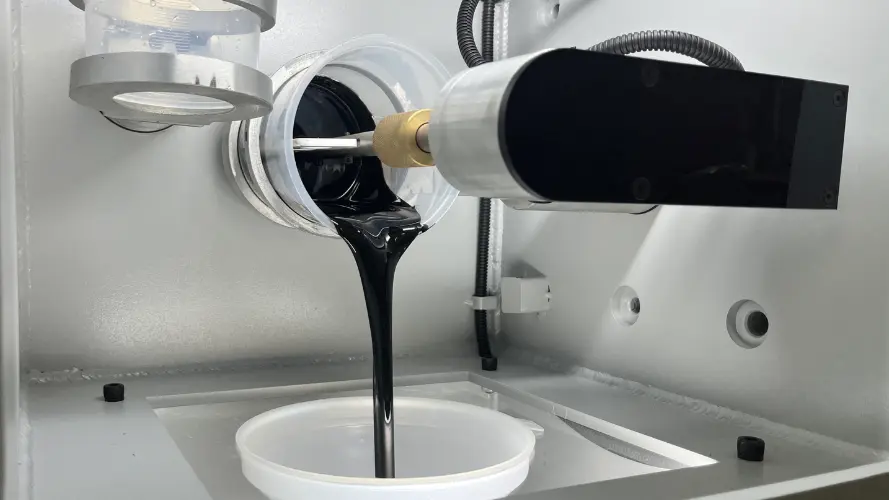
Vacuum casting—often referred to as urethane casting—is the premier silicone rapid prototyping method for duplicating high-fidelity plastic and rubber components. The process involves creating a high-precision silicone mold around a physical master pattern inside a controlled vacuum chamber. By extracting all ambient air molecules during atmospheric degassing, liquid polyurethane resins flow flawlessly into complex geometries. This makes vacuum casting prototyping the ultimate solution for pre-clinical trials, functional validation, and low-volume market releases.
While 3D printing is excellent for form verification, our silicone prototyping solves the ultimate challenge of functional testing: material realism and cosmetic perfection.
We fabricate a high-resolution master pattern using our advanced large-format SLA 3D Printing Services. The pattern is meticulously hand-polished to achieve your exact requested surface texture (matte, gloss, or custom texturing).
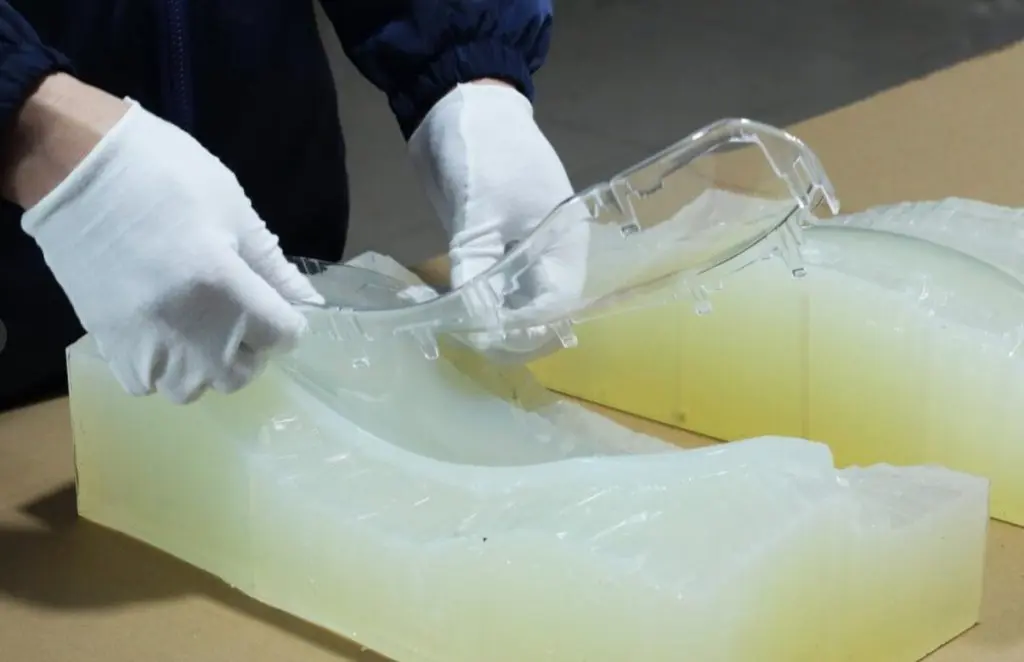
The master pattern is suspended inside a casting box, and high-quality, engineering-grade RTV liquid silicone is poured around it. It cures in a thermal oven, creating a highly durable, flexible split-mold negative.
The master pattern is removed. The silicone mold is clamped and placed inside an industrial vacuum chamber. Two-part polyurethane resin is mixed and poured under deep vacuum to guarantee zero internal air bubbles or voids.
The filled mold enters a thermal envelope to solidify completely. Once cured, components are extracted, gates are trimmed, and parts undergo final inspection for dimensional accuracy.
Complex air ducting assemblies, texturized interior dashboard trim panels, and functional enclosures for EV battery housing validation.
Small-batch manufacturing of biocompatible enclosures, pre-clinical ergonomic test models, and clear fluid-flow housings.
Lightweight, flame-retardant interior cabin components and ruggedized communication housings.
Precision casting of robust sensor housings and modular industrial connectors designed for harsh environments.
Vacuum casting 3D printing hybrid workflows to produce showroom-ready bezels, custom buttons, and appliance housings prior to mass production.
A: A standard silicone mold typically yields between 15 to 25 premium parts before dimensional tolerances begin to drift due to the chemical reaction of the curing resins. For larger batches, we seamlessly replicate the master pattern to cut additional silicone tools.
A: Our industrial casting process reliably holds general tolerances of ±0.15mm for the first few parts, moving to ±0.2mm as the silicone mold expands slightly over subsequent runs.
A: Yes. We tint the base polyurethane liquid resins prior to casting to achieve exact Pantone, RAL, or custom physical sample color matches. The color is completely integrated throughout the part.
A: Absolutely. We offer overmolding services, allowing us to cast a rigid ABS-like inner core and overmold it with a soft, rubber-like elastomer for ergonomic grips or custom seals.
A: For low volumes (10 to 50 parts), yes. Vacuum casting eliminates the tens of thousands of dollars required to machine steel injection molds, making it the most cost-effective bridge tooling solution available.